Overview
Role
Product Designer
Timeline
Q1-2 2022
Tools
Figma
Project
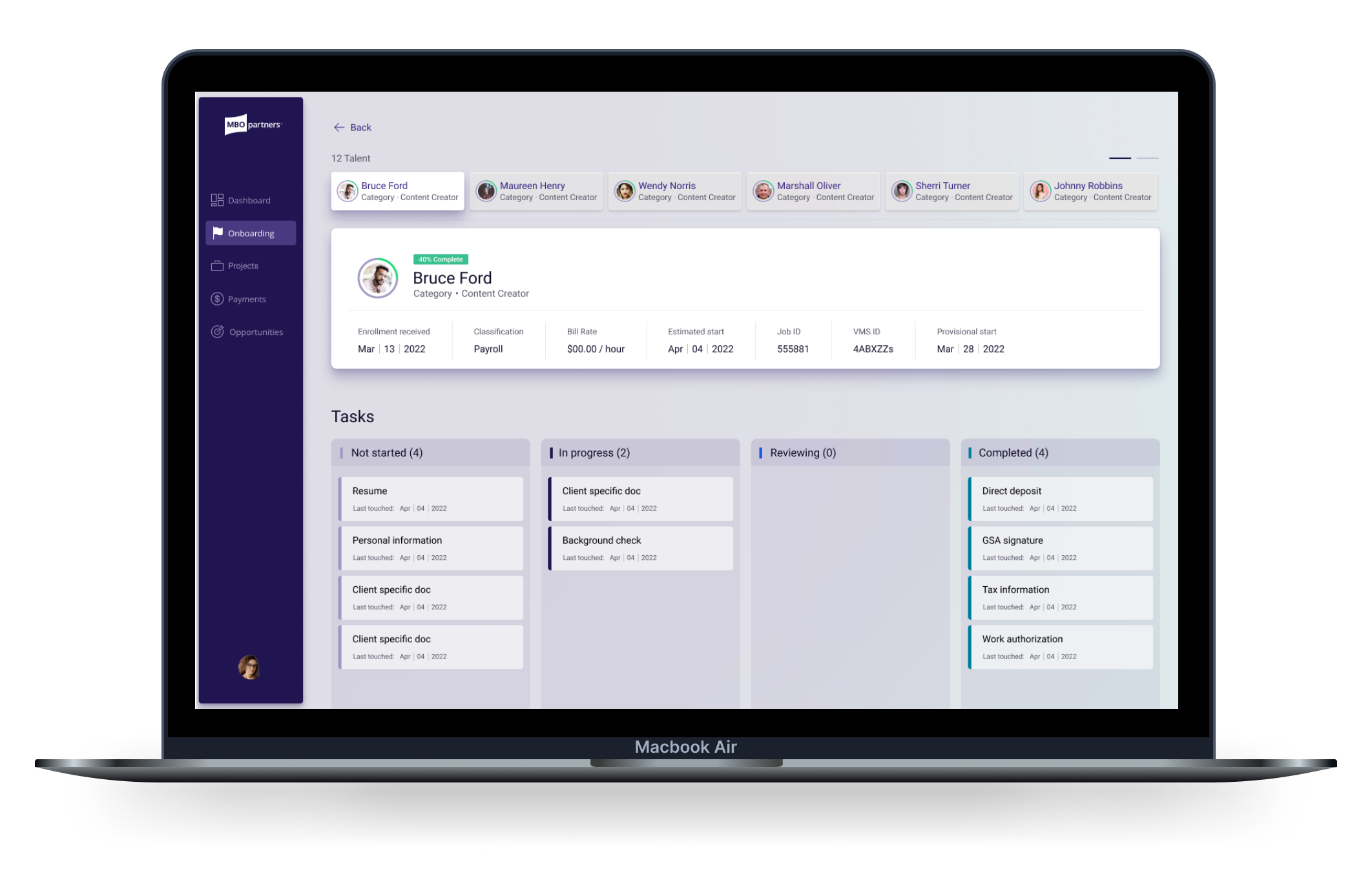
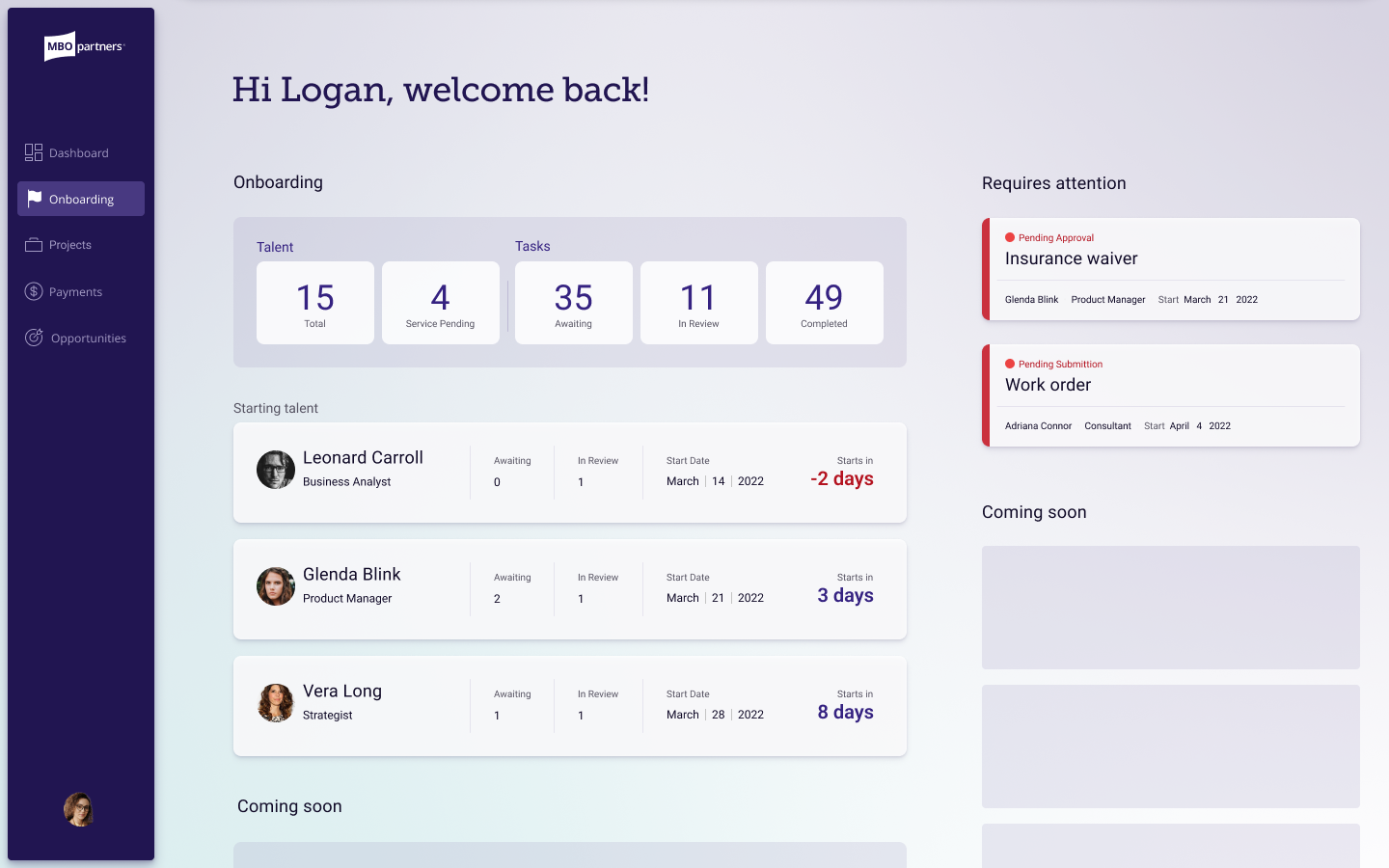
Design a new experience for our enterprise clients to have visibility into their Talent’s onboarding process while minimizing their interaction with account managers. This tool is one of the first being designed for our unified platform, Portal.
Problem
Our enterprise clients lack visibility into where their talent is within the MBO onboarding processes. This lack of visibility is seen as friction to the enterprise client and causes frustration in their MBO journey.
Challenge
MBO is known for “white glove” service for their clients, so many of them have nuances and exceptions to their onboarding process that we have to account for. Also, the client has multiple user types on their end and each of their visibility needs are different.
The Process
Research
Stakeholder Interviews
Define
User Flow
Ideate
Wireframes
Prototype
Testing
Usability testing
Iterations
Research
The product and design team were all fairly new so the discovery and research portion of this project was important. I quickly learned that the internal stakeholders didn’t haver much trust in our team due to their experience with the past team. Also, we had little to no documentation on the current process of onboarding.
To start, I decided to map out the current onboarding journey. This would allow me to learn in real time the current onboarding process, share with my PM and stakeholders to make sure that we didn’t miss any steps but also learn about certain exceptions and nuances for clients.
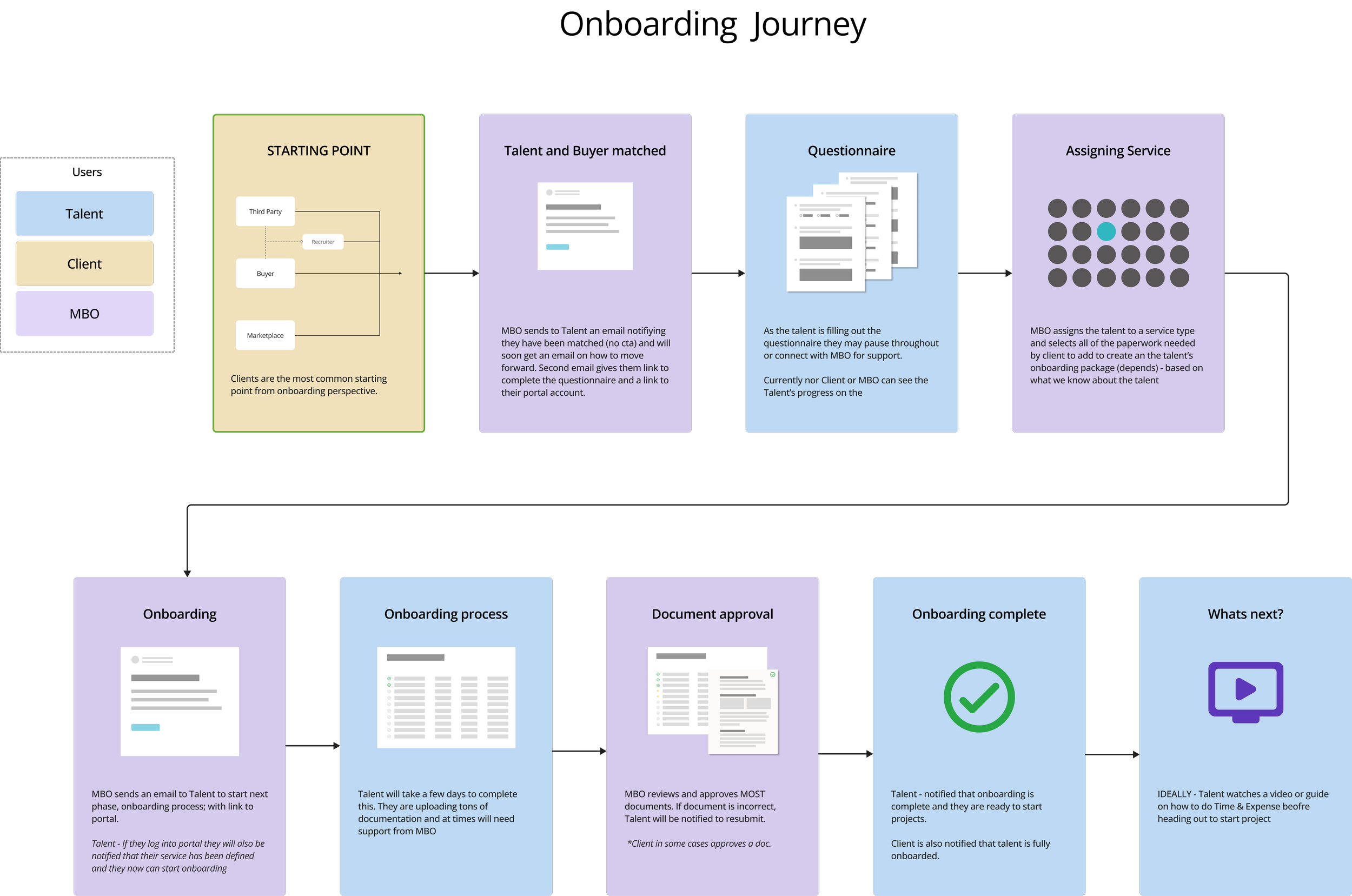
Once this journey was complete I had sessions with the enrollment team to confirm the journey and make sure we weren’t missing anything. These sessions gave us a better understanding of how detached the clients were from the process and how much time the enrollment team spends just gathering information to provide to the account managers so they can relay that to the clients. This also helped my PM start creating our own documentation as we would also need it when designing the talent and MBO’s side of onboarding.
At this point I really wanted to schedule interviews with a few of our clients, but the account managers were not willing to connect us. My second approach was to bring in the account managers into my process since they are the closest to the clients. I conducted the same session that was done with the enrollment team but more with a focus on the clients perspective at each steps. It not only helped me move forward but I could start feeling their confidence in our process.
Define
During research, I was very much in a design thinking mindset, but with some priority shifts for product and development, I needed to move in an agile way of thinking.
After the product manager defined the roadmap for client onboarding visibility the plan was to stay focused with a level of visibility that can work for all client types for MVP. So I went straight into user flows.
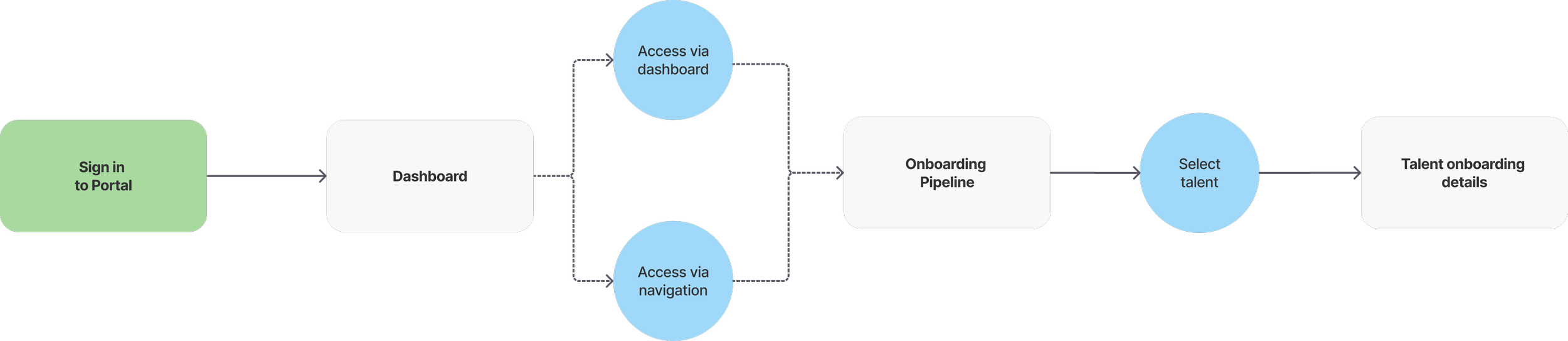
At this point we didn’t expect to have the opportunity to do user testing. So my strategy was to give users more than one option to access and view items so we can learn through our analytics and make changes for the next iteration.
Ideate
Prior to wire-framing, I had another designer walk me through our design system’s progress and explorations done with the development team on certain functionalities. This served as helpful guidelines as a started my lo-fi’s.
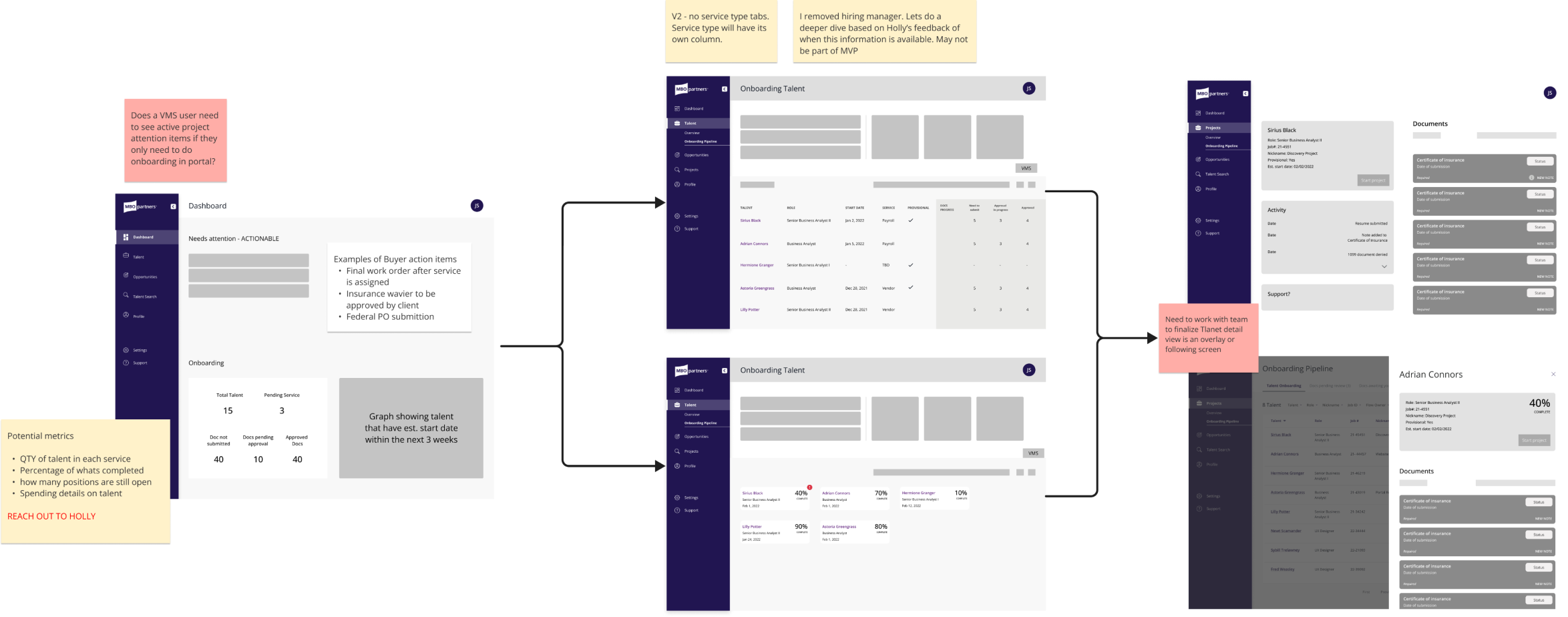
I went through many iterations for each screen and had multiple working sessions with the other designers. New ideas came out quickly through this process but so did more and more questions. Particularly around important metrics and data points the clients need to see.
I saw this as another opportunity to involve the account managers. My product manager and I would have sessions walking them through the lo-fi flow and we found it to be very valuable.
The account managers started to trust in us and see the value in the design process and it opened the door to usability testing
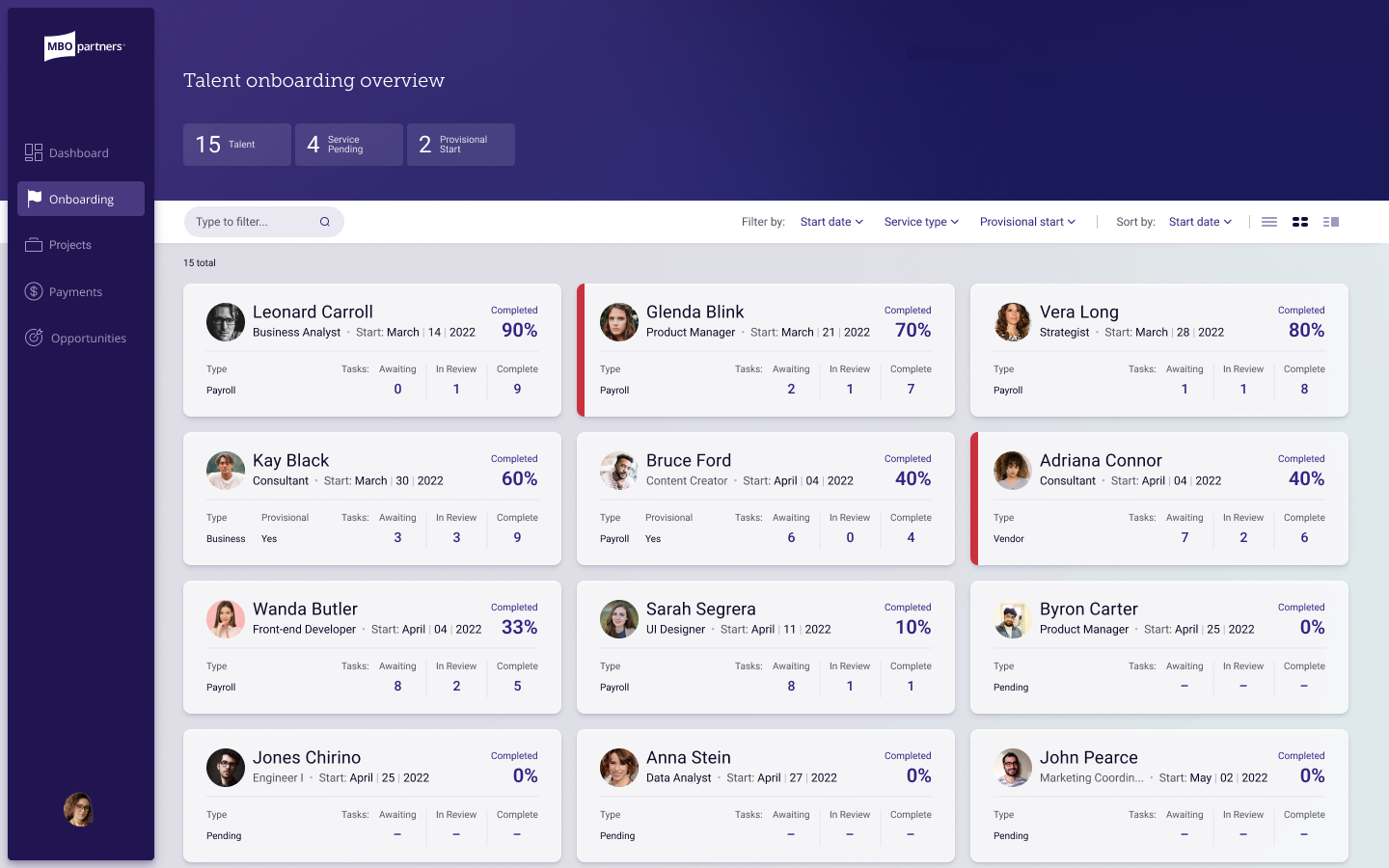
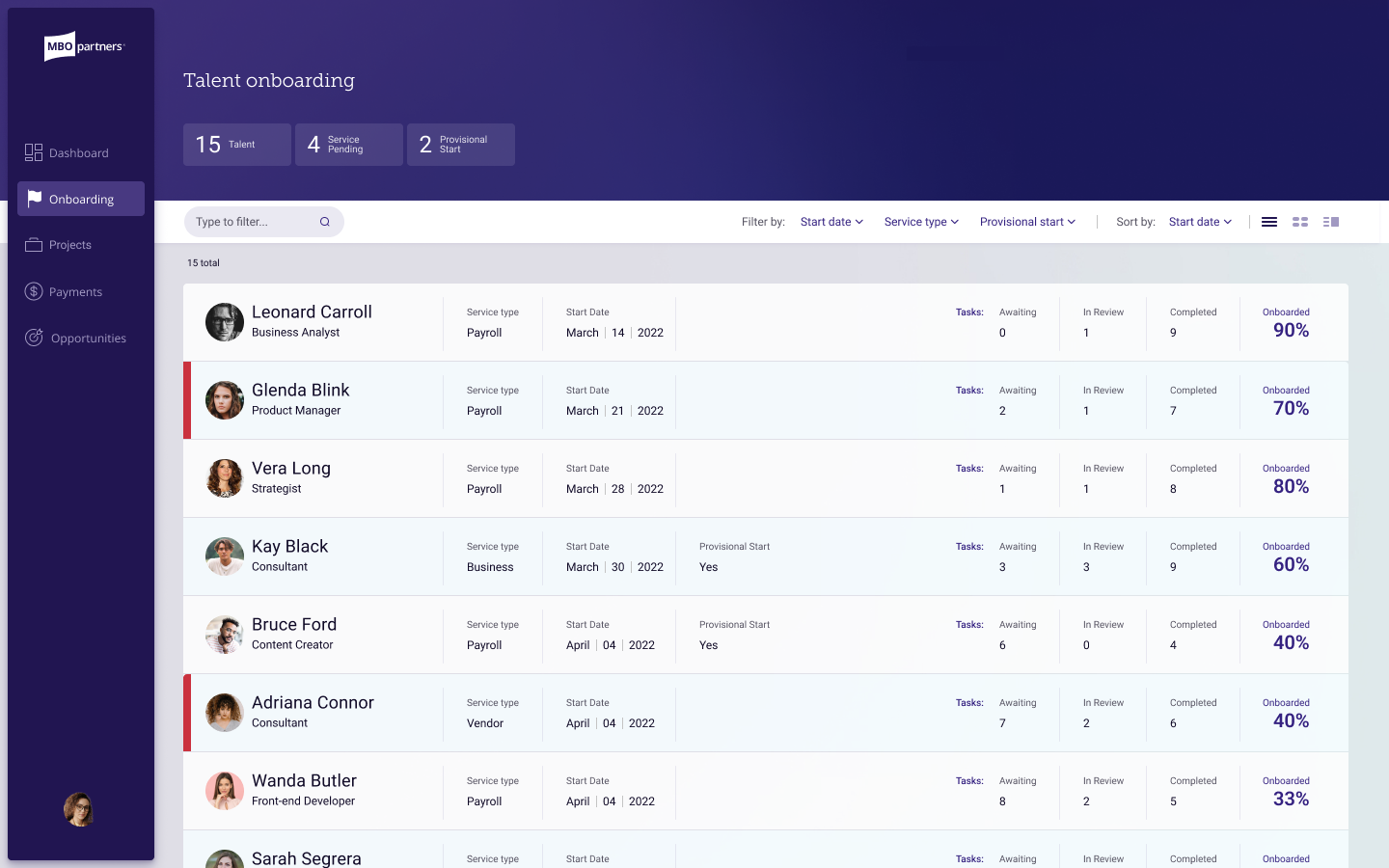
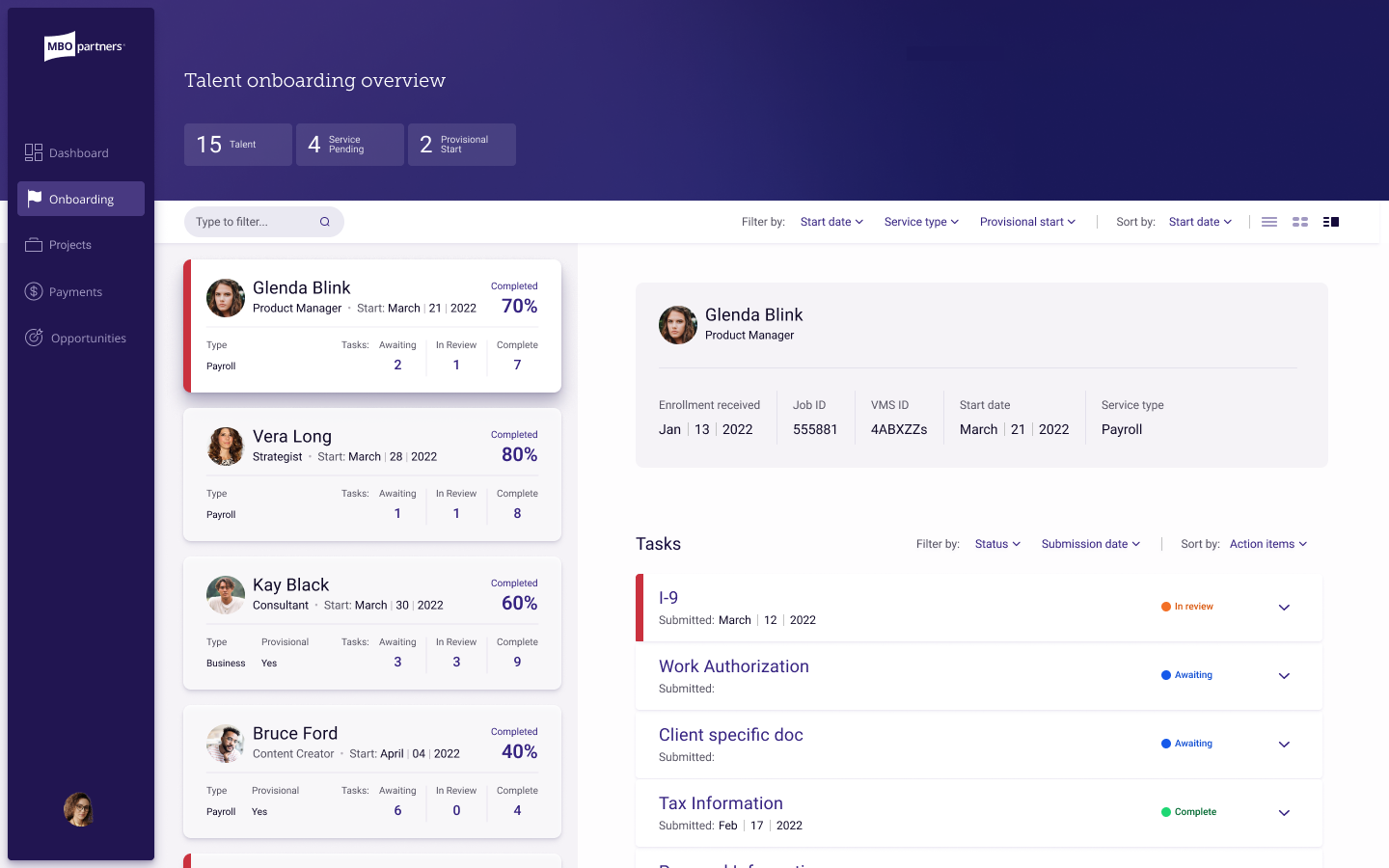
Now with the opportunity to test, we wanted to make sure our timeline accounted for it. I quickly went into mid-fi then hi-fi wireframes and with each step having collaborative working session with the design team. The design system was in its early stages, so I got the opportunity to work closely with our UI designers to create components that were specific to onboarding.
Testing
This would be the first time clients would be participants in a usability test for the team, so I wanted to make sure we learn about them as much as possible during each session. Validating our assumption that the designs met their needs was the priority, but this was also an opportunity to see how the user felt and experienced our UI.
I created the test plan consisting of our objective, script & scenario and six tasks. Below are the objectives:
Primary Learning Objectives
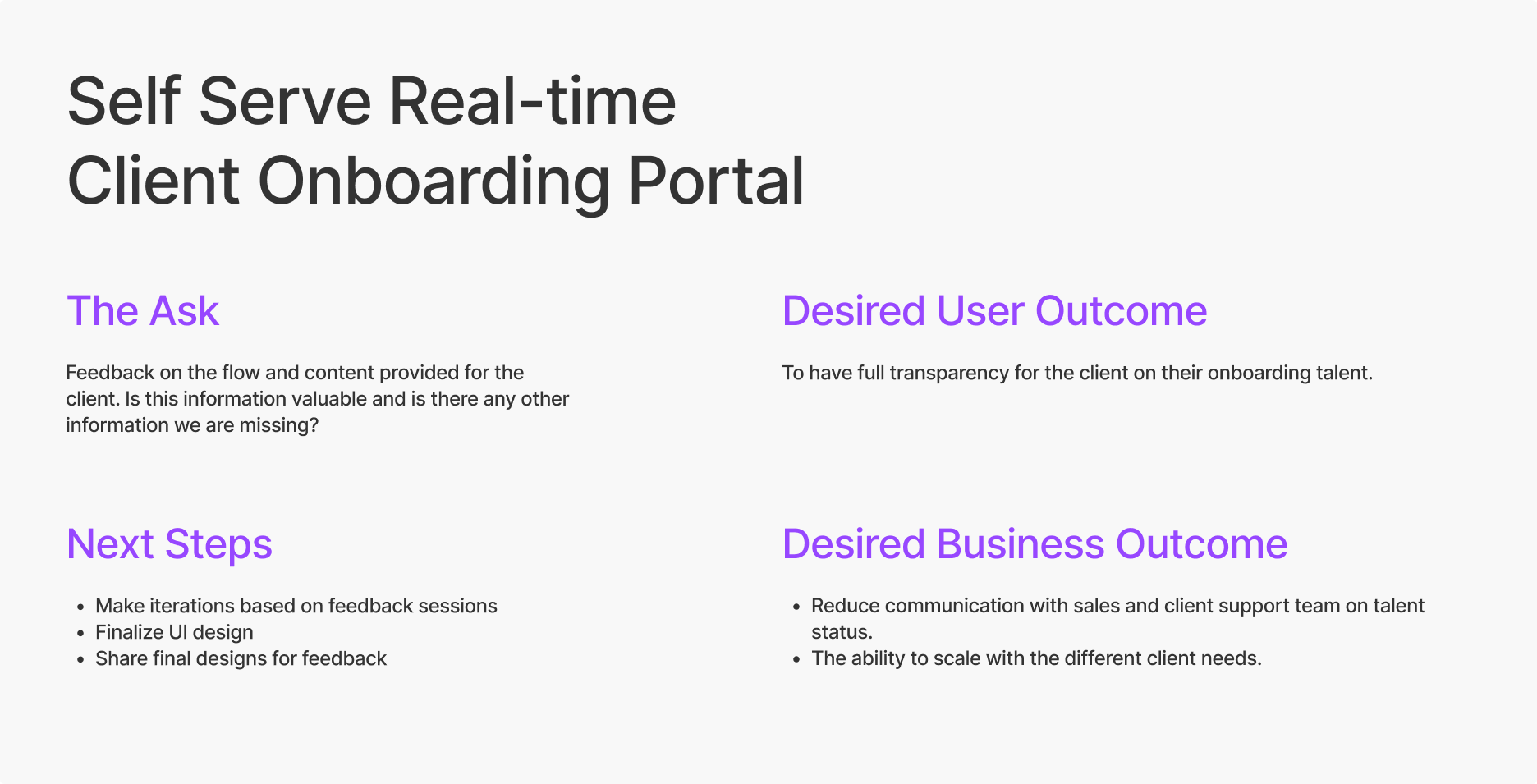
Validate that the flow and content is giving the Client enough visibility
Validate that the metrics and content are understood by
the clientLearn how each client differs in reviewing talent being
onboarded
Secondary Learning Objectives
Gather feedback on user’s interaction and experience with the UI
Overall the testing sessions were a success. We had 6 clients participate each testing via zoom calls and completing tasks on our prototype while sharing their screens. The clients were happy to participate and excited for the tool to launch and our account managers were very pleased with the process.
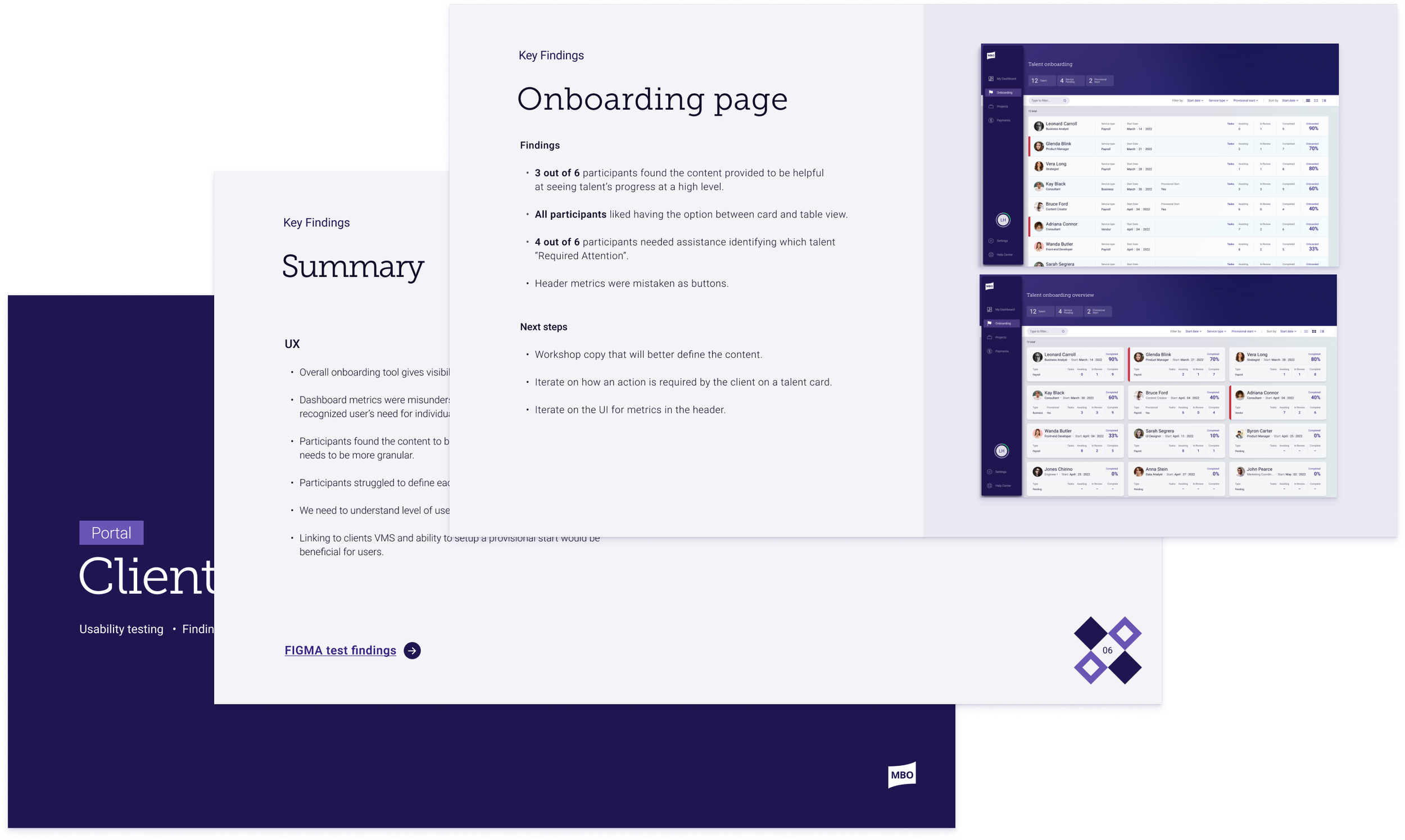
After gathering all the findings I gave the product manager my recommendations on how to move forward and we planned our next steps. I put together all the testing findings into a deck (above). This was presented to the product team and all the stakeholders, including the account manager. This is very important so everyone understands the '“why” of our next steps and why its valuable to the user.
Design
Iterate on UI and layout on multiple screens:
Onboarding header metrics
Talent’s detail view
Descoped dashboard - needs more discovery.
Copy iterations on the following:
Statuses
Service type / Classification
Metrics on the dashboard
Provide more content on how talent is segmented from the client’s perspective.
Future Development
Discovery on client dashboard.
Discovery on UI for action items across all of portal.
Iterate on client product tour for portal to include new onboarding tool.
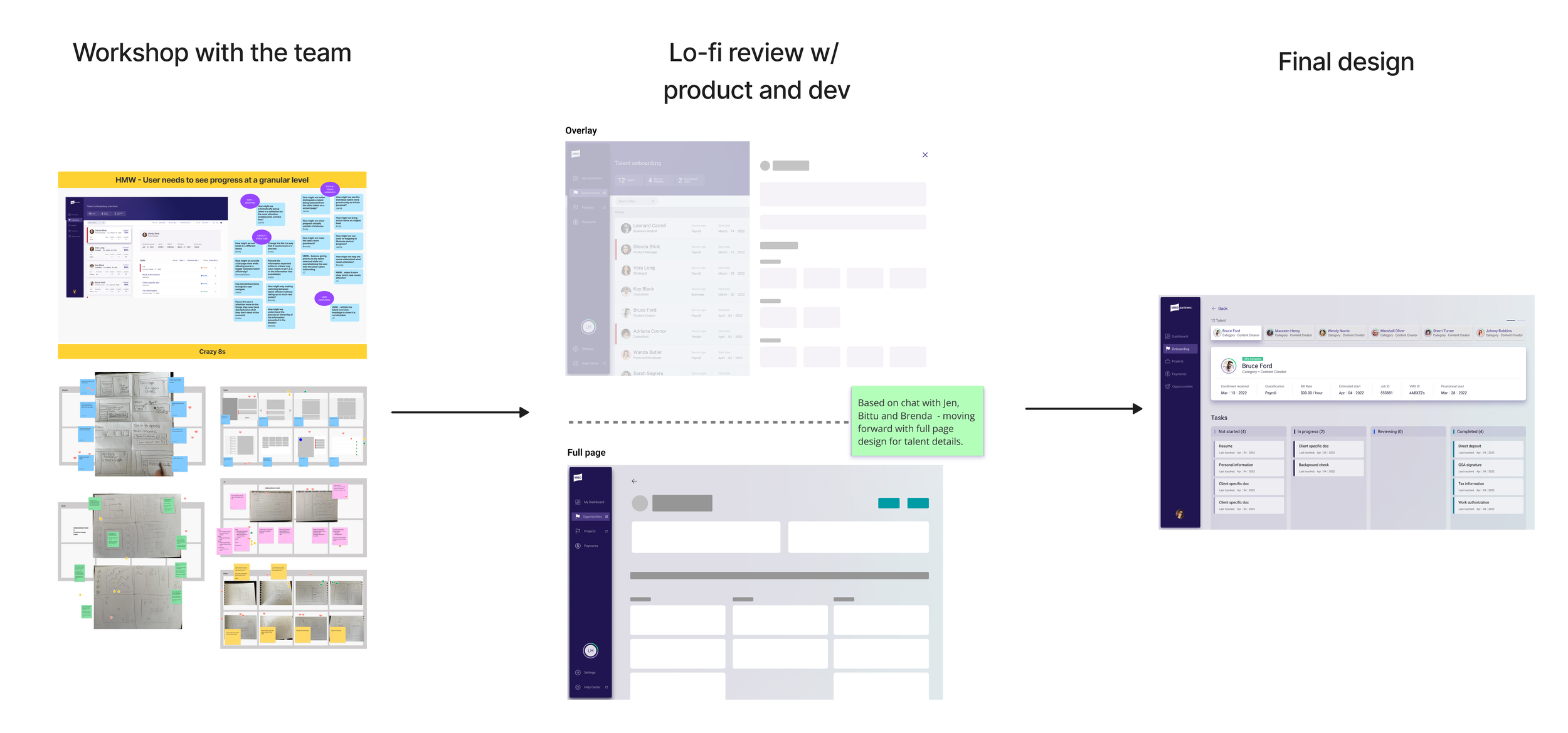
Most of the next steps for design were able to be done based on the feedback received from the participants but one, which was the talent details frame. Participants found it to be very distracting to see the other talent cards and expressed they only wanted to focus on the talent they selected. So I went through the process below to decide on the best solution.
Next steps
Once all the iterations were completed and approved we moved into handoff for development. Though some features have been descoped and there is still plenty unknowns with the user, I felt confident that we delivered a good solution for MVP. Both account managers and the clients who participated in testing were excited for the tool to launch. Once the tool is live, we will be able to see how much communication via calls and emails have gone down and next steps will be to collect all the data on how the tool is being utilized by users and prepare for next iterations which will include the descoped items (dashboard, action items and messaging capabilities.
Takeaways
As my first project on this team there were many lessons learned but also many successes. This projects measure of success was “giving visibility” and “adding to unification platform”. Through my discovery I was able to identify key metrics that we can track and give the users additional ways to measure their onboarding success.
Aside from the project itself, a huge win was the opportunity to evangelize the design process. From the product team to the COO, I had received great feedback. Looping in other teams into my process showed them the value of what I do and opened the doors to conducting the team’s first of many usability testing sessions. There has also been a great amount of collaboration within the design team and has helped us create processes making us a stronger and more synchronized team.