
Overview
Role
UX Designer
Working with another UX designer, an account manager & developers
Timeline
Sep 2020 - 3 weeks
Tools
Pencil & paper, Sketch, Milanote, Whimsical, InVision & Zeplin
Project
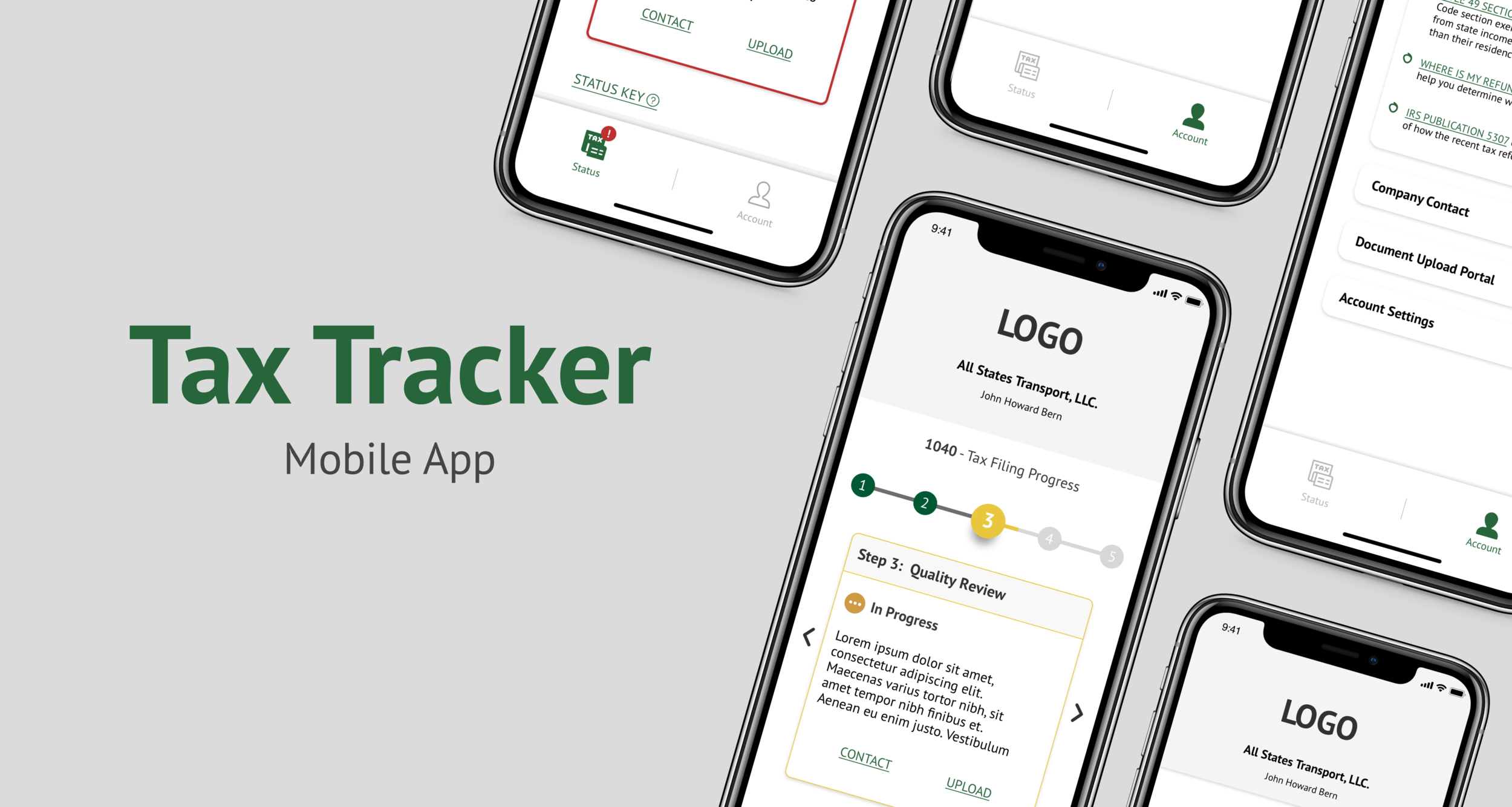
A private accounting CPA firm, client of Wynhouse, needed a simple, end-to-end mobile app for their clients to track their tax filing progress.
Problem
During tax season, the firm is flooded with calls from clients to get updates on their tax filings. Their clients need an easy and clear way to be able to check on their progress, send missing files and communicate with the firm without calling them directly.
Challenge
Giving the firm’s clients ease during tax season through visibility and accessibility.
The Process
Research
Research Insight
Persona
Define
Information Architecture Map
Ideate
Sketches
Wireframes
Prototype
Research
Prior to me and jumping into this project the other designer already had done some market research to better understand the tax process, what are the firm’s needs and who are their clients. So from there we synthesized all the research to better define the problem. Below are the top takeaways for both the firm and their clients
Accounting Firm
They keep referring to the “domino pizza tracker app”
Often contact client for missing paper work
Need certain IRS information made available to client via app
Client has a different point of contact for each step of tax filing process
Client
Want to know how long the filing takes
Need to have a better understanding of each task
Want an easy way to contact Abacus if need be.
Are frustrated with current process of sending documents
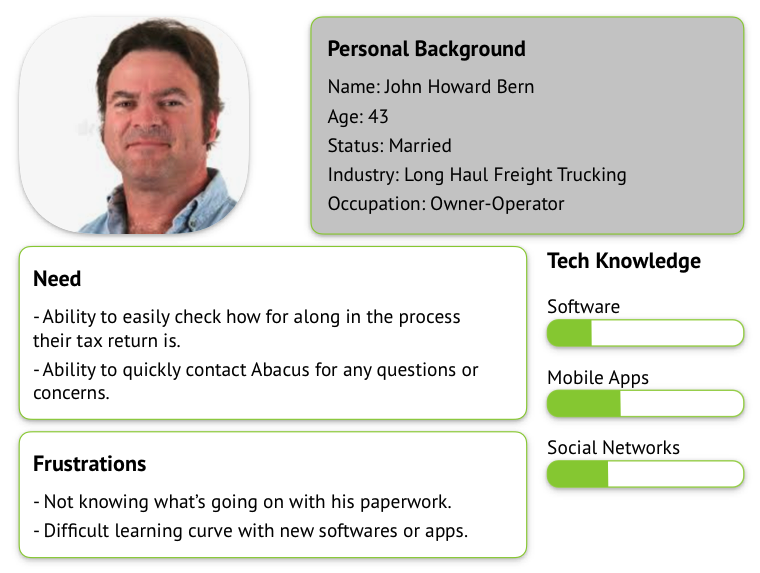
John’s persona was created to have an even deeper understanding of their typical client. He is a busy business owner and hates tax season. For him, having more visibility and access will make the tax filing process a bit easier.
Define
After identifying the firm’s and John’s needs I went straight to creating a IA map. This allowed me to see the structure of the app and all the information that needs to be included and in what priority.
I wanted to make sure that the tracker only held information that was necessary for the client see where their taxes are in the process. All other information like IRS Resources, account information, portal link to upload documents would live under account settings.
This private firm uses an accounting software named Practice CS and this system breaks down the filing process into multiple steps. For the front-end of the app, they want to consolidate to 6 clear steps. This makes it easier for the user to follow and appears less daunting of a process.
Ideate
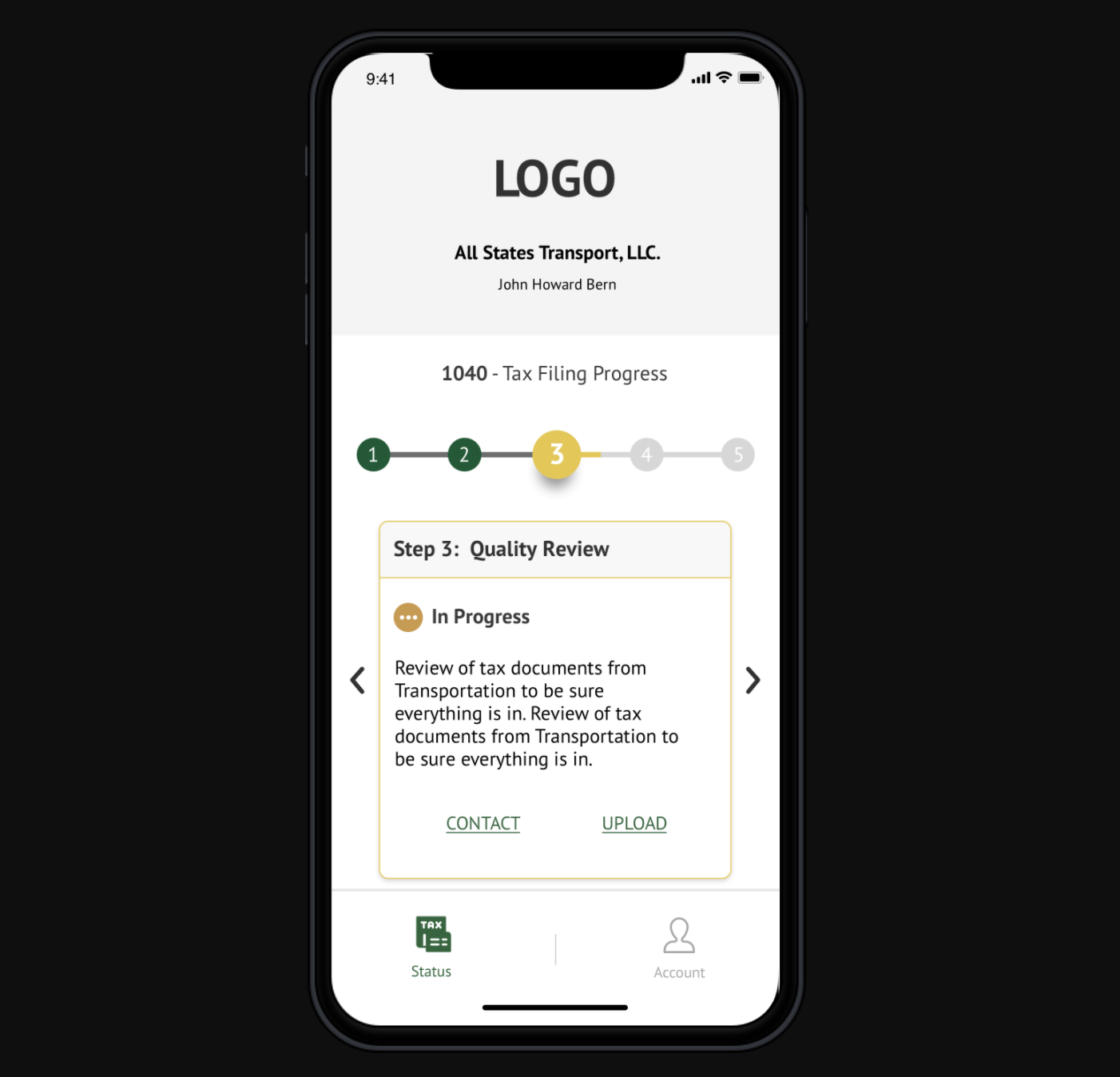
Once the IA map was completed I started to sketch out all my ideas. I wanted to show all steps of the process vertically to allowing John to see the entire process . The firm kept referring to the Dominos Pizza Tracker so I knew they wanted to see the progress bar at the top of the tracker page and this also immediately indicates to John where his tax filing is in the process.
After reviewing the different sketch variations I had we created wireframes and add into Milanote allowing us to collaborate with the PM and the developer.
After making a few changes based on the teams feedback, the wireframes were added to a prototype and presented to the accounting firm. They had good feedback on the designs but wanted a few changes to be made that was potentially going against the problem they wanted to solve: less phone calls and for John: more visibility.
Change tax steps layout to a horizontal view - they want the user to only be able to see the current task being worked on
Remove start & end date (they feel this is too much detail for the client to know)
Add their mascot “Abe” into the design interacting with the progress bar
Working with clients can be a balancing act at times, making the client happy and designing what the user needs. I knew some of the changes they requested could potentially create cognitive barriers for John, so I worked through a few iterations incorporating as much as I could from the clients feedback. When presenting the prototype to the client I made sure to connect all of my design decisions back to the needs of both client & their customer.
Ideally, testing is the next step I would take to validate our assumptions but in this case the accounting firm was on a tight deadline and ultimately decided to move forward with development once all members of the firms signed off on the final prototype.
The developer on the project was very involved in all our our design sessions, so this made for a very smooth hand off.
Take aways
The biggest challenge on this project was navigating the relationship between client and designer. I’ve learned that sharing with the client my process as a designer creates a certain level of trust. Though we didn’t have the opportunity to do testing